
Today’s Theme: Non-binary, Transgender youth.
Happy Pride Month!
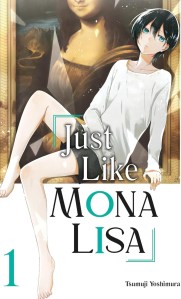
Just Like Mona Lisa, Pages: 192
Publisher: Square Enix Manga, 04/16/2024
ISBN-10 1646092775, ISBN- 13 978-1646092772
Intended Audience: YA
Goodreads Rating 3.51, Amazon Rating 4.3
Personal Rating: Do you want drama, because this is how you get drama?
5/5 ⭐⭐⭐⭐⭐
In this world, people are born without a gender. Their bodies shift toward their desired gender when they reach twelve years old. Until Hinase’s eighteenth spring, they lived content without a gender. But the bubbly girl Ritsu and thoughtful boy Shiori pull Hinase in opposite directions when they both confess their feelings on the same day! Romance was never on Hinase’s mind, so how can they respond? Hinase may be forced to choose a new identity as they arrive at the cusp of adulthood. Who will they choose, and who will they become?
What would our society look like if our gender identity wasn’t developed till puberty?
I didn’t know what to expect when I first started to read this but I knew that I would enjoy every second of it.
A lot of that has to do with the impact gender norms typically have on a growing child. In this society, one would assume that such a concept wouldn’t limit one’s ability to be who one wishes to be, but that couldn’t be further from the case. Even though one’s gender identity is a personal choice, they are still influenced by others’ views and expectations. Case in point, Hinase is genderless, and yet they are being “forced” to develop an identity due to their possible romantic relationship with either Ritsu (♀️) or Shiori (♂️).
I felt like I was breaking while reading this. Hinase struggles to understand who they are in comparison to others. They experience fear of change and conforming to one gender like everyone else, but they are also afraid of being the one who remains the same. Some subplots make their situation especially heartbreaking, but it is something that I found fascinating. I won’t go into too much detail, but they are within a time limit. Hinase must figure out who they are and who they want to be with without delay.
Final thought: This was depressing. There is an undertone of hopelessness with this that is difficult to look past because no matter the end result, Hinase is ultimately changing for a high school romance. They aren’t deciding their gender for any other reason outside of that. At least, that is the takeaway from the first book. This opens them and their potential partner up for resentment later on as they come to terms with the fact they are always going to have that ‘What if’ sitting in the back of their mind.
What if they chose the other person?
What if they chose the wrong gender?
What if they had stayed unchanged?
We do many things for those we love, but changing one’s entire being is a push in a direction I don’t have the mana to debate.
Fun Fact: Shiori is traditionally a girl’s name, while Ritsu is typically given to boys. This creates a unique dynamic, as a parent’s expectations at birth may not align with the child’s identity.
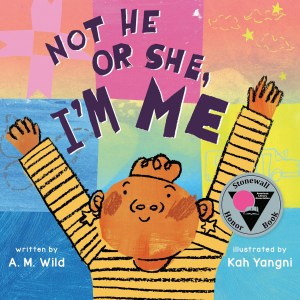
Not He or She, I’m Me, Pages 32
Publisher: Henry Holt and Co. (BYR), 10/17/2023
ISBN 978-1250818607
Intended Audience: 3-6 years old
Goodreads Rating 3.8, Amazon Rating 4.4
Personal Rating: Well…Thank goodness for Library cards, amirite?
2/5 ⭐⭐
A day in the life of a nonbinary kid.
From the first page, Yangni’s mixed-media art sets a dynamic tone for this exuberant story. Accompanied by rich layers of acrylic paint, newsprint, crayon, watercolor, and more, gently rhyming text follows the young narrator as they get dressed, eat breakfast with Mom, and ride the bus to school. Throughout, the child repeats the titular mantra: “Not he or she, I’m me.” – Kirkus, starred review
Yeah, I didn’t like this. I read this and found myself confused more than intrigued. While it was nice to see a story of a young non-binary kid living a relatively normal life, I found it far too mundane to care about what was taking place. The Kirkus review gives away the plot. This kid wakes up, eats, goes to school, plays with their friends, and goes home. There is nothing outside of pretty colors and the repetitive line that they are “Not he or she, I’m me,” which, while delightful, does make me want to eat the book. This book is 32 pages long, and that line is repeated on nearly every page. That means that I read the same sentence, at most, 32 times, but in actuality, it was probably less.
🏆
Kirkus Review – Booklist – BCCB
Stonewall Book Award Honor Book (2024)
Fun Fact: While illustrator Kah Yangni has published other works before, this is writer A.M. Wild’s first story. They are working on other titles through the same publishing house that will be released at an undisclosed date.
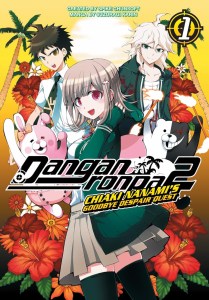
Danganrompa 2: Chiaki Nanami’s Goodbye Despair Quest, Pages 200
Publisher: Dark Horse Manga, 08/18/2024
ISBN-10: 1506740243, ISBN-13: 978-1506740249
Intended Audience: 14+
Goodreads Rating 4.4, Amazon Rating 4.2
Personal Rating: Get Gud, Noob!
2/5 ⭐⭐
“I guess you could say gaming is my life… or my life is a game.”
Yes, Chiaki Namani of the famous video game series Danganrompa, one could argue that gaming is the reason you exist.
What could be nicer than the semester at the elite Hope’s Peak High School to kick off with a class trip to the tropical resort of Jabberwock Island? And what could be more horrific to then be told by the principal that now they’re all trapped there…and the only way they can ever leave is to play a murder game!
The rules are simple: to escape, you must not only kill a fellow student, but get away with it, as the survivors will then cross-examine each other in a class courtroom. If they vote the wrong person guilty, the killer goes free…and the rest of them die!
Chiaki Nanami is the Ultimate Gamer, selected as one of Japan’s most expert teens to attend Hope’s Peak High School. With no margin for error and the stakes so high, the Ultimate Gamer will need to use all her playing skill to suss out the secrets of Jabberwock Island and find the “true ending” for Nanami and her friends…survival and escape!
–Dark Horse Manga
Hope’s Peak High School can be summed up as a school of ambition. Each student is a leader within their specific (and I do mean specific) craft whose main goal is to rise above, graduate, and go on to help create a society that seeks to improve the lives of everyone, everywhere. However, what the founder failed to consider is the ethical issues that can come from focusing solely on the best of the best while ignoring those they see as “lesser.”
Chiaki Nanami is one such student known as the Ultimate Gamer. She is one of the key components in figuring out why her and her fellow classmates have been sent to the island and how they all return back home.
I played the third game in this series and watched the first two animes. However, this is the first time I have read one of the manga and I can honestly say that I am glad that I waited. For one, to truly understand this series you kind of have to have some awareness of the games lore. This is because there is a lot that is left out in the series. For one, we are introduced to a character named Byakuya Togami ( Ultimate Affluent Progeny) fairly early one. Readers may not know this right off that bat, but there are two characters with this name. While the reason why was not explained in the manga, it is in the game and anime.
I do not recommend reading the manga without playing the games or watching the anime. To much is taken out which makes this a confusing read.
Regarding today’s theme, I do have to reach into spoiler territory a bit. As I stated, Byakuya Togami shares a name with another character in the series. A lot of that has to do with the fact that Byakuya’s true label is that of the Ultimate Imposter. Their true name and gender have never been shared throughout the series (so far). We also have Nanami, the Ultimate Gamer; while they primarily use she/her pronouns, other media sources have them down as they/them. This is due to yet another spoiler that I will not get into. One interesting thing to note is that this series has a lot of LGBT+ representation, which is fascinating considering the themes. But again, spoiler.
I like this series a lot. However, I dislike this manga. I don’t think that it holds up well on its own and was hard to follow at times due to all the information being given at once. Despite only covering the first murder, there isn’t a lot going on. What I dislike most about this is how zero information is given regarding every Ultimate skill. For one Gundham Tanaka is known as the “Ultimate Breeder”. He is called that because he has an amazing bond with animals. While he skilled at getting them to procreate that is because they have a deep trust in him and believe that he will take care of them.
Fun fact: It would make sense for multiple people to hold the same Ultimate ability and yet the only true case of people holding the same ability is with the Ultimate Luck skill. While there are some similarities in titles (there is a character with with Ultimate Art skill and another who is known as the Ultimate Artist. Yes, there is a difference and no, I do not know what it is.)
Additional Fun Fact: They have a character who is known as the Ultimate Serial Killer. She is delightful.
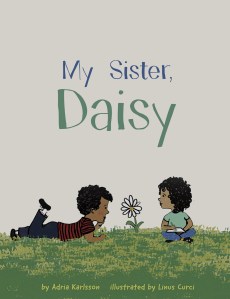
My sister, Daisy, Pages 32
Publisher: Capstone, 09/01/2021
ISBN-13: 978-1684463848
Intended Audience: 5-7
Goodreads Rating 4.4, Amazon Rating 4.9
Personal Rating: Siri! Cue Pretty Little Baby, by Connie Francies, stat.
4.5/5 ⭐⭐⭐⭐
Told from the perspective of Daisy’s brother, MY SISTER, DAISY acknowledges the tough questions that may arise for children when a peer identifies differently than before, while providing heartfelt answers in a child-friendly manner.
– Andrew Hackett (2022)
Those who support, but are not members of, the LGBTcould probably teach classes about how the reality of showing support doesn’t always match what’s written out on paper. Even I, a member of the LGBT community, sometimes come across those who may use a label that baffles me. In theory, I support it, but how far does it go face-to-face with a situation that affects me personally? Though this is a children’s story, it does a good job of trying to answer those questions from a child’s perspective. The unnamed protagonist has never had a memory that didn’t feature their brother in some capacity. Although they are the oldest, they have always been there beside them. So, color them surprised when their brother turns out to be their sister; all they know is now under debate. While they try their best to support their sibling by calling them by their preferred name and using their proper pronouns, they still struggle with the notion that the brother they grew up with is gone. The theme is that the protagonist must learn to adapt to change while acknowledging that it isn’t an end. Their brother may be their sister, but they haven’t changed as a person. They are still there, and they care for them the same way they did before.
What I liked best about this is that the protagonist admitted to being angry about the situation. They also talked about being confused. Yet despite this they never once blamed or hated their sister. They loved her and stood by her while asking important questions that helped them gain a better understanding.
🏆
Children’s Book Council and National Council for the Social Studies (NCSS), 2022 Notable Social Studies Trade Books
Skipping Stones, 2022 Skipping Stones Book Award
Fun Fact: This story is based on the authors’ own experience when their child came out as transgender. The brothers experience is based on their son who struggled to adapt to their siblings change. Eventually they were able to adjust to a new norm.

Camp Prodigy, Pages 130
Publisher: Atheneum Books for Young Readers
ISBN-13: 978-1665930390
Intended Audience: 8-12 years, middle school
Goodreads Rating 4.1, Amazon Rating 4.4
Personal Rating: Ticky Tock, Heart stops!
4.6/5 ⭐⭐⭐⭐
Before a concert, Tate got lost while trying to find the restroom. Instead, they found someone, Eli, playing the most beautiful melodies on the viola. That moment changed their life forever, and then and there, Tate wanted to play the viola just like Eli. Despite being the worst player in the school, Tate is determined to get better. By chance, Tate comes across a summer orchestra camp called Camp Prodigy, which Eli also attended. Together, they work hard to become the best musicians they can be and compete to play the solo at the end of the camp concert.(Paiges & Lalypops , 2024)
This story has a lot going on. Tate is our main character, and they struggle with coming out as nonbinary to their friends and loved ones. However, this isn’t the only thing they seem to struggle with. They have a hard time coming clean on almost everything, making it so no one close to them actually knows the truth. They don’t advocate for themselves, leaving them with constant heartbreak as those around them unintentionally hurt them with their words and actions. Eli is our other main character. They are also nonbinary but their main problem is that they aren’t able to play the viola anymore due to anxiety. A lot of things take place in this story but most of it involves the characters addressing their various fears and coming to terms with their limitations. What I loved about this book how the author chose to convey their message with the art. Tate is uncomfortable when they are referred to with male pronouns but they also can’t stand it when people say more gendered, although still masculine in some ways, labels like ‘dude’. Readers are able to see the impact this has although no words were used to show this.
Within the same vein is the thing I dislike: the art. This is a subjective opinion, but the art is sometimes awkward, thanks partly to the overexaggerated expressions during serious moments. Suppose two characters have an argument that causes some core memory to form. Why would the artist give their feature a more cartoonish quality, making it difficult to take the scene seriously?
Also, why was Tate allowed to go to a camp and join their school orchestra when they had no clue about the basics of playing an instrument? They didn’t even know how to read sheet music! I feel like this was something the school should have addressed when they first started before they even got to touch the instrument. No one said that they had to be good at it, but they should at least understand some of the terminology.
Fun Fact: I identify as nonbinary and use they/them pronouns. But I have never seen someone use the label Mx when referring to a nonbinary person. I know it is a thing, but I haven’t heard it used. So color surprised me when it was used consistently throughout this story. I darn near cried first time because of how happy it made me.
⭐Honorable Mentions⭐
Otherwise known as the ‘Oh this won’t count towards my page goal but I didn’t find that out till after I googled it’ Gang
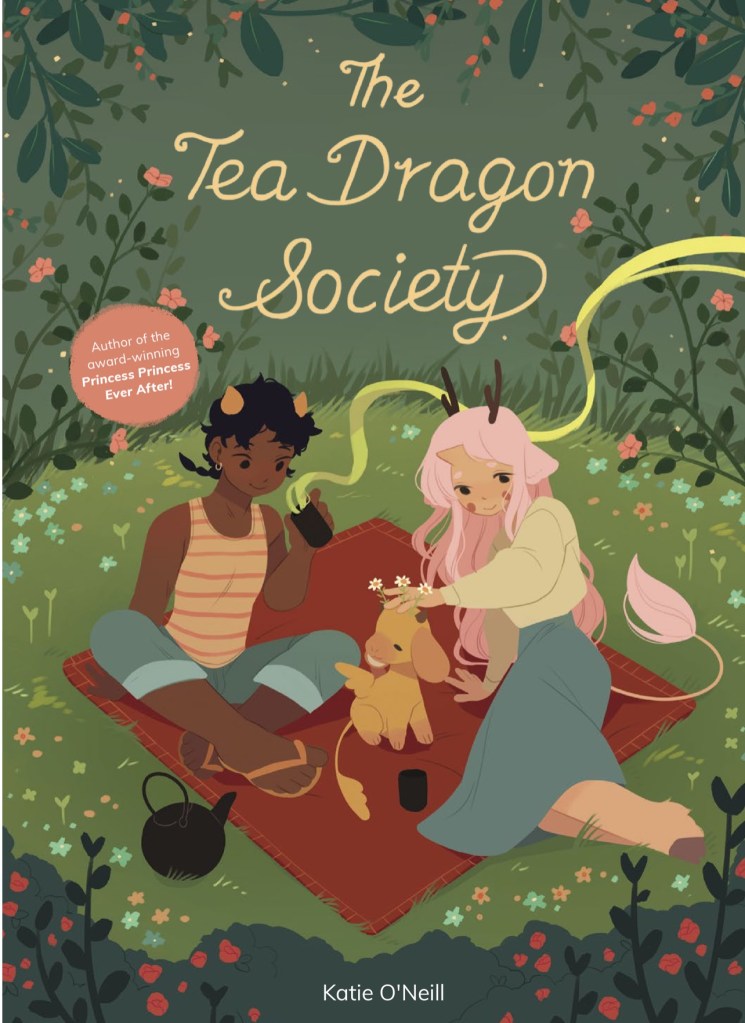
O’Neill, K. (2020). Tea Dragon Society. Oni Press. (Original work published 2017)
5/5⭐⭐⭐⭐⭐
This story has so much representation that it is sometimes hard to keep up. However, I adored every second of it and found it to have some rather fascinating lore. The idea of getting tea from dragons is not something I have heard of before, but I like it a lot. Plenty of fantasy stories call for using by-products of fantasy creatures for food, but nothing that appeared to be so wholesome. These dragons are well-loved and respected; the tea makers seem to revel in that. I like that this world isn’t perfect, though. Erik was hurt and became wheelchair-bound. While it was only touched on for a moment, there was a moment where he felt grief and regret for what happened because he believed it had a negative impact on his significant other. Their conversation didn’t last long, but it spoke to some part of me that often wonders at the burden of one’s existence when they are disabled. Sure, their loved ones may not see them as such, but it is hard not to see oneself as holding them back. I am disabled and often have those fears, so to see that sort of response in a story for children was just eye-opening.
While the first book doesn’t have a nonbinary character there is one included in the second book.
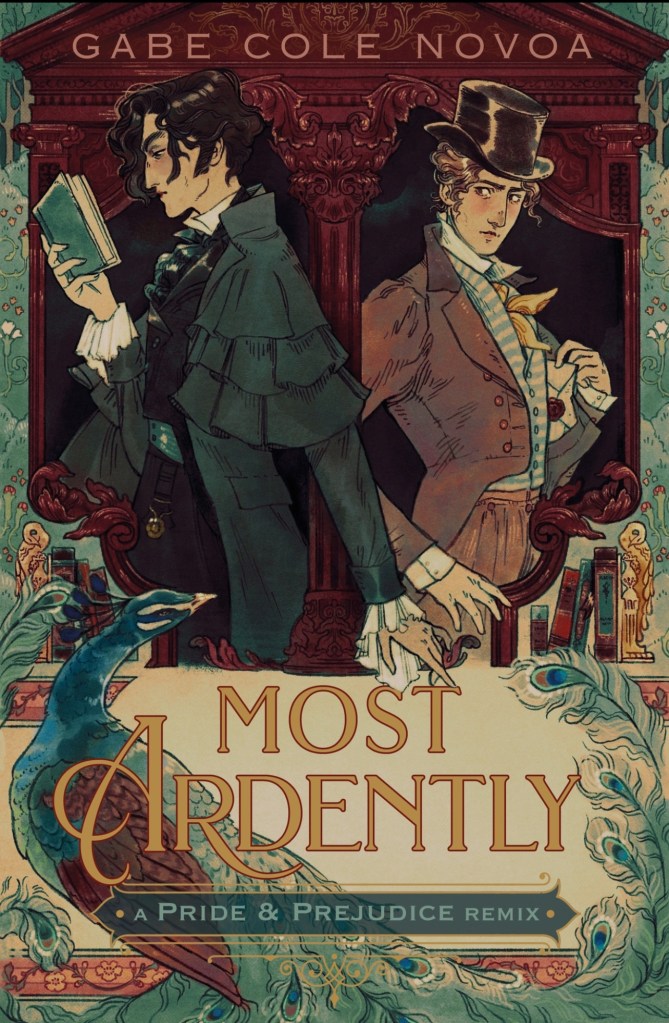
Most Ardently: A Pride & Prejudice Remix. (2024)
1/5 ⭐
Plot holes and backtracking. Oliver was prone to anger over people misgendering them but seemed to live in a society that didn’t approve of such concepts. So much so that they never actually told anyone that they were a man (at the point that I had stopped reading). It made it difficult to read through the interactions and understand their point of view. On the other hand, we have Darcy. And that is all.
Citation
Chunsoft, S., & Suzuragi, K. (2024). Danganronpa 2: Chiaki Nanami’s Goodbye Despair Quest Volume 1. Dark Horse Comics.
Connie Francis – Official , & Youtube. (2025, May 27). Connie Francis – Pretty Little Baby (Offical Audio) . Youtu.be. https://youtu.be/A1MdThqGarI?si=Rtgt_0P6uPtnE6Rc
Hacket, A. (2022, February 23). My Sister, Daisy. Teachers | Books | Readers. https://teachersbooksreaders.com/2022/02/23/my-sister-daisy/amp/
Karlsson, A. (2021). My Sister, Daisy. Capstone.
Kirkus. (2023). Not He or She, I’m Me [Review of Not He or She, I’m Me]. Kirkus, XCI(19). https://www.kirkusreviews.com/book-reviews/m-wild/not-he-or-she-im-me/
Manzanares, J., & Booklist Reviews. (2023). Booklist Online: Leading Book Discovery [Review of Booklist Online: Leading Book Discovery]. Booklistonline.com. https://www.booklistonline.com/products/9782296
Novoa, G. C. (2024). Most Ardently: A Pride & Prejudice Remix. Feiwel & Friends.
O’Neill, K. (2018). The Tea Dragon Society – Illustration by Katie O’Neill. Ktoneill.com. https://ktoneill.com/index.php/portfolio/the-tea-dragon-society/
O’Neill, K. (2020). Tea Dragon Society. Oni Press. (Original work published 2017)
Paiges & Lalypops . (2024, July 12). Camp Prodigy by Caroline Palmer | Graphic Novel Review – Paiges & Lalypops. Paiges & Lalypops. https://paigesandlalypops.com/camp-prodigy/
Palmer, C. (2024). Camp Prodigy. Simon and Schuster.
Skipping Stones. (2022). A Multicultural Literary Magazine. Skipping Stones, 34(1), 13. https://www.skippingstones.org/wp/wp-content/uploads/2022/09/SkippingStones34.1.lr_.pdf
Wild, A. M. (2023). Not He Or She, I’m Me. Henry Holt Books For Young Readers.
Yoshimura, T. (2024). Just Like Mona Lisa 01. Just Like Mona Lisa.
 Monody Reads
Leave a comment